
Sizing information
| Overall size (inc frame) | x cm ( x in) |
| Depth | cm (in) |
| Artwork | x cm ( x in) |
| Border (mount) |
cm
top/bottom
(in)
cm left/right (in) |
| The paper size of our wall art shipped from the US is sized to the nearest inch. | |

Our prints
We use a 200gsm fine art paper and premium branded inks to create the perfect reproduction.
Our expertise and use of high-quality materials means that our print colours are independently verified to last between 100 and 200 years.
Read more about our fine art prints.
Manufactured in the UK, the US and the EU
All products are created to order in our print factories around the globe, and we are the trusted printing partner of many high profile and respected art galleries and museums.
We are proud to have produced over 1 million prints for hundreds of thousands of customers.
Delivery & returns
We print everything to order so delivery times may vary but all unframed prints are despatched within 1–3 days.
Delivery to the UK, Ireland, mainland EU & US is free when you spend £75. Otherwise, delivery to the UK costs £5 for an unframed print of any size.
We will happily replace your order if everything isn’t 100% perfect.
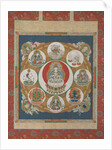
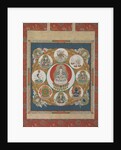
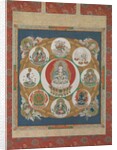
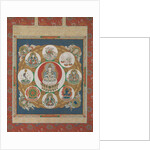
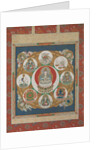
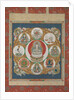
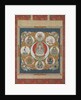
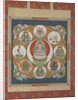
Product images of Mandala of the One-Syllable Golden Wheel, 18th century




Product details Mandala of the One-Syllable Golden Wheel, 18th century
Mandala of the One-Syllable Golden Wheel, 18th century
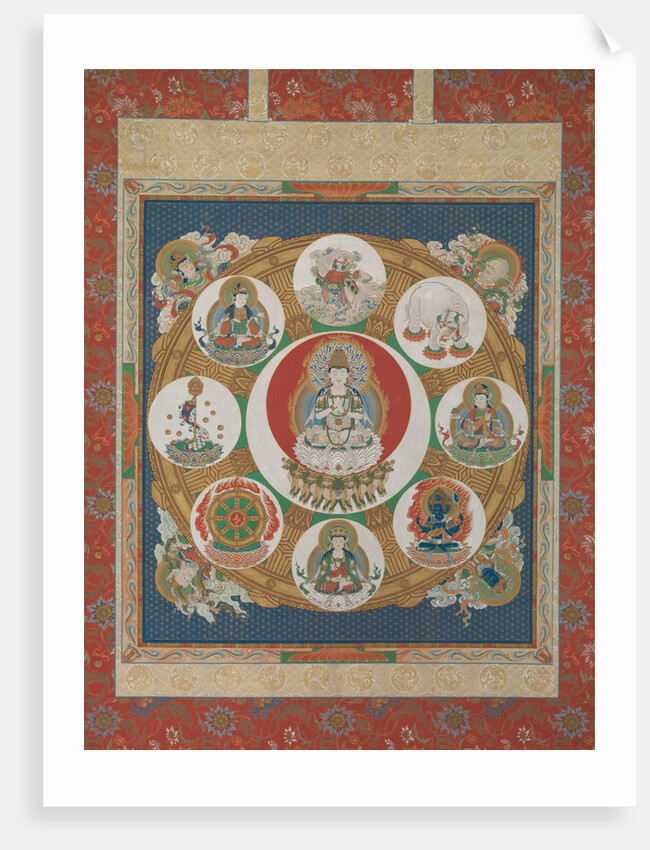
Mandala of the One-Syllable Golden Wheel, 18th century. The Mandala of the One-Syllable Golden Wheel (Japanese: Ichiji Kinrin Mandara) envisions the power of a single Sanskrit syllable, the utterance of which calls forth a personification of the cranial protuberance of the Buddha. It is used in rituals for the prevention of disaster, for the expansion of wealth, and for success in love, as well as for assuring safe delivery of children, career success, and propitious weather. The figural representation of the sound sits at the center of the mandala on a lotus pedestal borne by eight lions. It resembles the Buddha Dainichi (Sanskrit: Vairochana) and holds its hands in a sacred gesture known as the wisdom-fist mudra, which symbolizes the non-duality of perfect wisdom and the deluded nature of unenlightened beings. The surrounding figures and forms represent the seven emblems of sovereignty of supreme rulers and the deity Butsugen Butsumo, literally Buddha-eye, Buddha-mother, who crushes ignorance and perceives the essence of all things.
- Image ref: 2757827
- Heritage Art/Heritage Images
Find related images
zoom