
Sizing information
| Overall size (inc frame) | x cm ( x in) |
| Depth | cm (in) |
| Artwork | x cm ( x in) |
| Border (mount) |
cm
top/bottom
(in)
cm left/right (in) |
| The paper size of our wall art shipped from the US is sized to the nearest inch. | |

Our framed prints
Every framed picture is created by hand in our workshop by specialist framers.
Black, white, silver, gold or natural frames available, supplied ready to hang.
All our frames have a smooth satin finish, and measure 20mm (front face) by 23mm (depth from wall).
Read more about our framed art prints.
Manufactured in the UK, the US and the EU
All products are created to order in our print factories around the globe, and we are the trusted printing partner of many high profile and respected art galleries and museums.
We are proud to have produced over 1 million prints for hundreds of thousands of customers.
Delivery & returns
We print everything to order so delivery times may vary but all framed pictures are despatched within 3 days.
Delivery to the UK, Ireland, mainland EU & US is free when you spend £75. Otherwise, delivery to the UK costs £10 for a single framed print.
We will happily replace your order if everything isn’t 100% perfect.
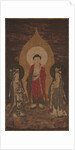
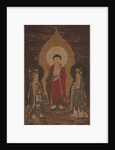
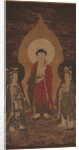
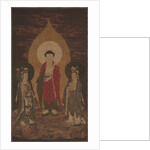
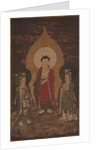
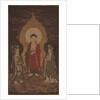
Product images of Amitabha Triad, possibly 1400s


Product details Amitabha Triad, possibly 1400s
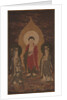
Amitabha Triad, possibly 1400s
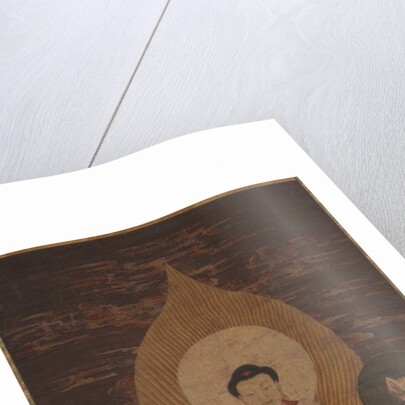
Amitabha Triad, possibly 1400s. This hanging scroll illustrates a dramatic apparition of Buddha Amitabha (??? in Chinese) and the two attendant bodhisattvas, or saintly beings, in the midst of colourful light and swirling clouds. The one who carries a miniature image of Amitabha in its jeweled crown is Avalokitesvara (?? in Chinese); and the other who carries a flower vase is Mahasthamaprapta (??? in Chinese). Previously, this work was identified as a rare example of a Korean Buddhist painting from the early Joseon period. In contrast to surviving Korean works from this time the scroll stands out for its fine details. Elements such as the striped almond-shaped halo that encircles the main Buddha, firm red lines that define each deity?s facial features, and the naturalistic rendition of flowing garments identifies it as an excellent example of early Ming period Chinese Buddhist painting.
- Image ref: 2722831
- Heritage Art/Heritage Images
Find related images
zoom