


Sizing information
| Overall size (inc frame) | x cm ( x in) |
| Depth | cm (in) |
| Artwork | x cm ( x in) |
| Border (mount) |
cm
top/bottom
(in)
cm left/right (in) |
| The paper size of our wall art shipped from the US is sized to the nearest inch. | |

Our framed prints
Every framed picture is created by hand in our workshop by specialist framers.
Black, white, silver, gold or natural frames available, supplied ready to hang.
All our frames have a smooth satin finish, and measure 20mm (front face) by 23mm (depth from wall).
Read more about our framed art prints.
Manufactured in the UK, the US and the EU
All products are created to order in our print factories around the globe, and we are the trusted printing partner of many high profile and respected art galleries and museums.
We are proud to have produced over 1 million prints for hundreds of thousands of customers.
Delivery & returns
We print everything to order so delivery times may vary but all framed pictures are despatched within 3 days.
Delivery to the UK, Ireland, mainland EU & US is free when you spend £75. Otherwise, delivery to the UK costs £10 for a single framed print.
We will happily replace your order if everything isn’t 100% perfect.
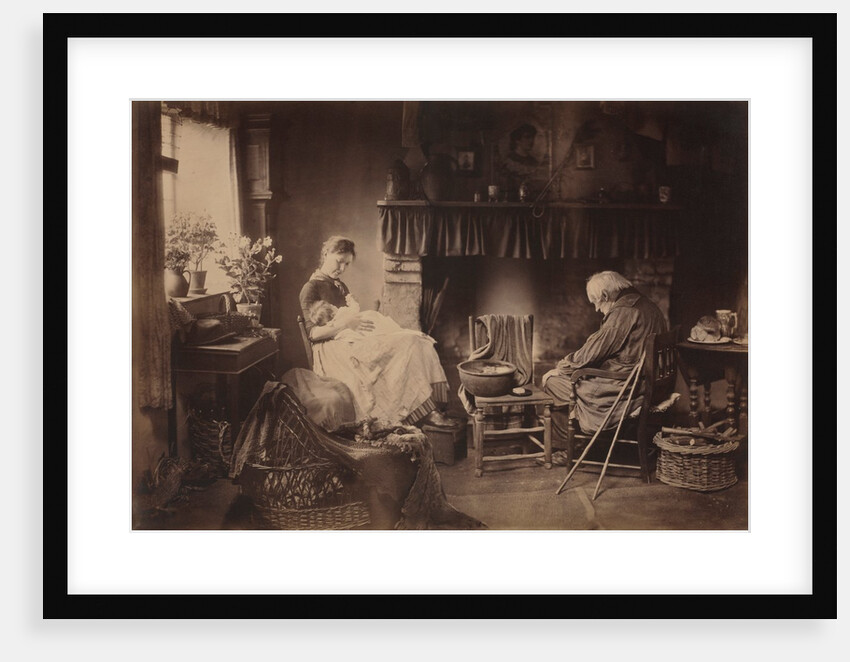
Product images of Dawn and Sunset, 1885



Product details Dawn and Sunset, 1885
Dawn and Sunset, 1885
Dawn and Sunset, 1885. Henry Peach Robinson was a pioneer in the "combination printing" technique, employing a number of negatives to make one photographic print. Keenly interested in portraying picturesque narrative scenes and landscapes, he carefully staged elaborate tableaux, often relying on relatives to serve as models. In Dawn and Sunset he presented a symbolic portrayal of three generations, from infancy to old age. By using the combination method, he was able to exercise greater control over his subjects poses, gestures, and expressions than would have been possible with a single exposure. The smaller, platinum print version provides an instructive example of how an artist's vision can change when a different process is used to print the same negative. The platinum process provided a warmer, more subtle tonal range than the albumen process. The larger, albumen print appears almost journalistic in its use of harsh, even lighting, whereas in the platinum print Robinson was able to hide many details in dark shadow. This created a sense of unity that is missing in the larger image.
- Image ref: 2726947
- Heritage Art/Heritage Images
Find related images
zoom


