


Sizing information
| Overall size (inc frame) | x cm ( x in) |
| Depth | cm (in) |
| Artwork | x cm ( x in) |
| Border (mount) |
cm
top/bottom
(in)
cm left/right (in) |
| The paper size of our wall art shipped from the US is sized to the nearest inch. | |

Our framed prints
Every framed picture is created by hand in our workshop by specialist framers.
Black, white, silver, gold or natural frames available, supplied ready to hang.
All our frames have a smooth satin finish, and measure 20mm (front face) by 23mm (depth from wall).
Read more about our framed art prints.
Manufactured in the UK, the US and the EU
All products are created to order in our print factories around the globe, and we are the trusted printing partner of many high profile and respected art galleries and museums.
We are proud to have produced over 1 million prints for hundreds of thousands of customers.
Delivery & returns
We print everything to order so delivery times may vary but all framed pictures are despatched within 3 days.
Delivery to the UK, Ireland, mainland EU & US is free when you spend £75. Otherwise, delivery to the UK costs £10 for a single framed print.
We will happily replace your order if everything isn’t 100% perfect.
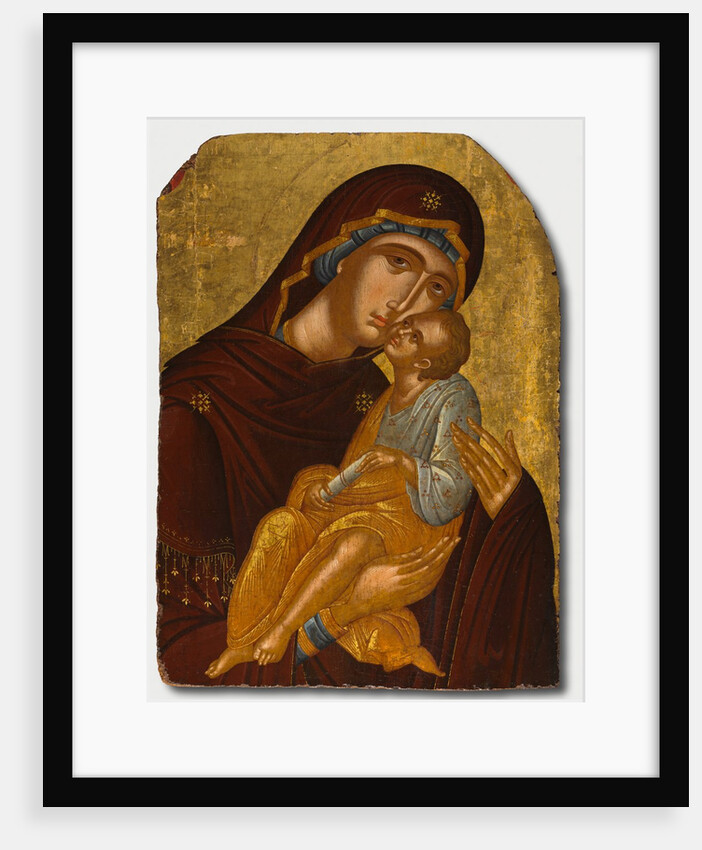
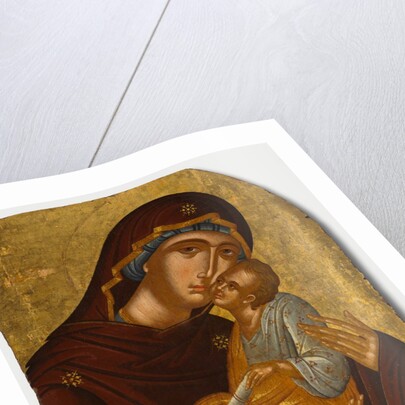
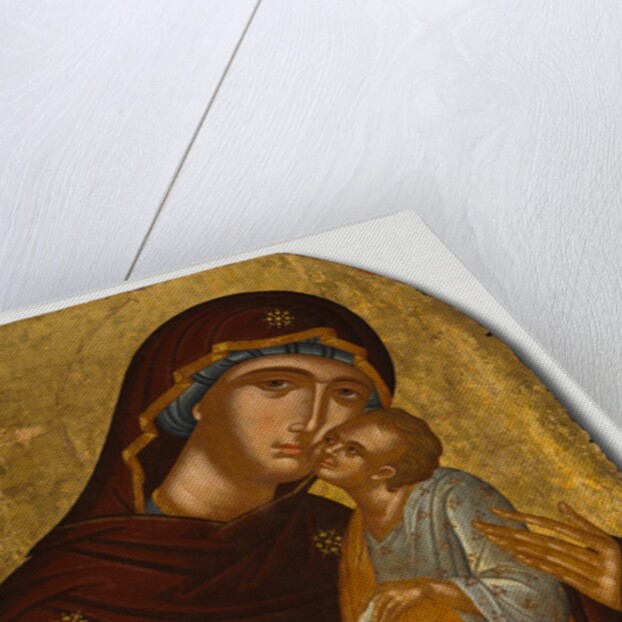
Product images of Icon of the Mother of God and Infant Christ, c. 1425-50


Product details Icon of the Mother of God and Infant Christ, c. 1425-50
Icon of the Mother of God and Infant Christ, c. 1425-50
Angelos Akotantos (attributed to)
Icon of the Mother of God and Infant Christ (Virgin Eleousa), c. 1425-50. This type of icon is known as the Virgin Eleousa (Virgin of Tenderness) characterized by the touching cheeks of mother and child in a loving moment. The icon signifies Christ?s incarnation, suffering, and death for the sake of humankind. Three ornamental stars on the Virgin?s cloak are traditional symbols of her chastity; a blue cap covers her hair and protects her modesty. The child wears a pale green tunic and deep orange cloak, both highlighted in gold. The Christ Child holds a scroll tied with a ribbon, a symbol of the Gospels. The icon was painted by the Cretan icon painter Akotantos, the preeminent artistic personality on Crete during the 1400s. This icon is from his period of greatest activity and pre-dates the collapse of Constantinople in 1453. The treatment of the faces and draperies is handled with fluency and skill and reveals Akotantos to be a painter of great talent. Given its large scale, the icon was intended for use within an orthodox church, possibly a monastery, and not for a private home.
- Image ref: 2732001
- Heritage Art/Heritage Images
Find related images
zoom


