
Sizing information
| Overall size (inc frame) | x cm ( x in) |
| Depth | cm (in) |
| Artwork | x cm ( x in) |
| Border (mount) |
cm
top/bottom
(in)
cm left/right (in) |
| The paper size of our wall art shipped from the US is sized to the nearest inch. | |

Our framed prints
Every framed picture is created by hand in our workshop by specialist framers.
Black, white, silver, gold or natural frames available, supplied ready to hang.
All our frames have a smooth satin finish, and measure 20mm (front face) by 23mm (depth from wall).
Read more about our framed art prints.
Manufactured in the UK, the US and the EU
All products are created to order in our print factories around the globe, and we are the trusted printing partner of many high profile and respected art galleries and museums.
We are proud to have produced over 1 million prints for hundreds of thousands of customers.
Delivery & returns
We print everything to order so delivery times may vary but all framed pictures are despatched within 3 days.
Delivery to the UK, Ireland, mainland EU & US is free when you spend £75. Otherwise, delivery to the UK costs £10 for a single framed print.
We will happily replace your order if everything isn’t 100% perfect.
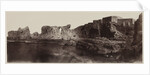
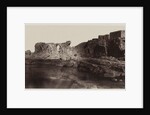
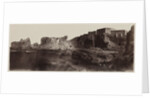
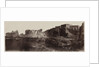
Product images of Kaalat el Athlit, Syria, View from the Seaside, 1859




Product details Kaalat el Athlit, Syria, View from the Seaside, 1859
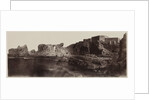
Kaalat el Athlit, Syria, View from the Seaside, 1859
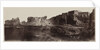
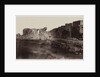
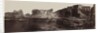
Kaalat el Athlit, Syria, View from the Seaside, 1859. After fulfilling his obligation to a government-sponsored expedition to the crusader castles of Syria and Asia Minor, Louis de Clercq continued his photographic exploration of the Holy Land, moved on to Egypt, and returned to France through Spain. From the probably several hundred paper negatives he took during his extensive travels, de Clercq published a selection of 222 albumen prints, divided into 6 volumes, which were frequently bound as 5 albums, titled Voyage in Orient(1859-60). This carefully posed panorama of the Syrian coastline at Kaalat el Athlit, bathed in warm light and luminous shadows, records the sweep of space and rugged beauty of the site, emphasizing its geographical and topographical features. Interestingly, de Clercq?s use of the panoramas represents an impressive technical achievement, since the difficulties in mid 19th-century photography only increased when the negatives had to form a continuous image. His panoramas also reveal the period?s zeal to convey as much information as possible about the experience of a place.
- Image ref: 2732760
- Heritage Art/Heritage Images
Find related images
zoom