Sizing information
| Overall size (inc frame) | x cm ( x in) |
| Depth | cm (in) |
| Artwork | x cm ( x in) |
| Border (mount) |
cm
top/bottom
(in)
cm left/right (in) |
| The paper size of our wall art shipped from the US is sized to the nearest inch. | |

Our prints
We use a 200gsm fine art paper and premium branded inks to create the perfect reproduction.
Our expertise and use of high-quality materials means that our print colours are independently verified to last between 100 and 200 years.
Read more about our fine art prints.
Manufactured in the UK, the US and the EU
All products are created to order in our print factories around the globe, and we are the trusted printing partner of many high profile and respected art galleries and museums.
We are proud to have produced over 1 million prints for hundreds of thousands of customers.
Delivery & returns
We print everything to order so delivery times may vary but all unframed prints are despatched within 1–3 days.
Delivery to the UK, Ireland, mainland EU & US is free when you spend £75. Otherwise, delivery to the UK costs £5 for an unframed print of any size.
We will happily replace your order if everything isn’t 100% perfect.
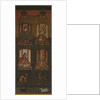
Product images of Koya Myojin, 16th century




Product details Koya Myojin, 16th century
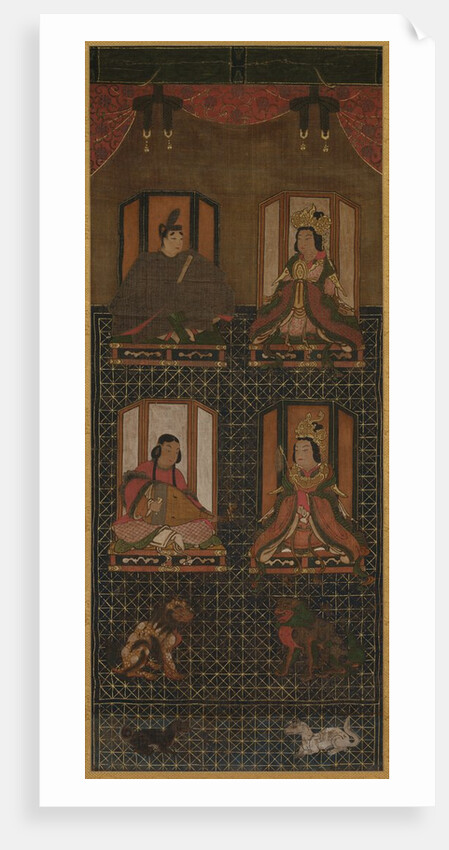
Koya Myojin, 16th century
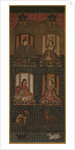
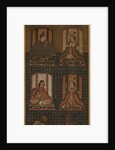
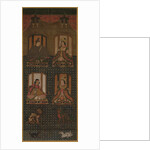
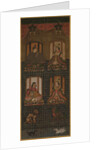
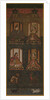
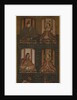
Koya Myojin (Mandala of the Four Deities of Mt. Koya), 16th century. Upon his arrival in Japan, the 9th-century Chinese Buddhist priest Kukai began searching for a mountain location that would be suitable for a meditation hall. Along the way he met a Japanese hunter with two dogs who helped him find a site on Mount Koya. This building became the home of the influential Esoteric sect of Japanese Buddhism, and still flourishes today. The male figure dressed in aristocratic garb at the upper left of this composition is the hunter, here deified as a spirit of Japan's pre-Buddhist, Shinto faith. He is joined by his wife and below by two female Shinto deities from other Shinto shrines in Japan. Beneath them, the black and white dogs refer to the hunter's role in the story. This joining of foreign Buddhist and native Shinto imagery represents an important aspect of Japanese cultural history. The attractive gold "diaper" pattern in the lower portion of the painting represents the painted stone tiles of a religious building. The lines are thin strips of gold foil rather than paint applied with a handheld brush.
- Image ref: 2732945
- Heritage Art/Heritage Images
Find related images
zoom