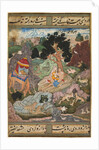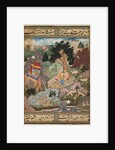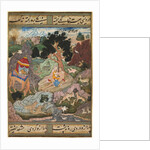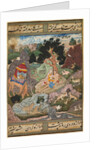
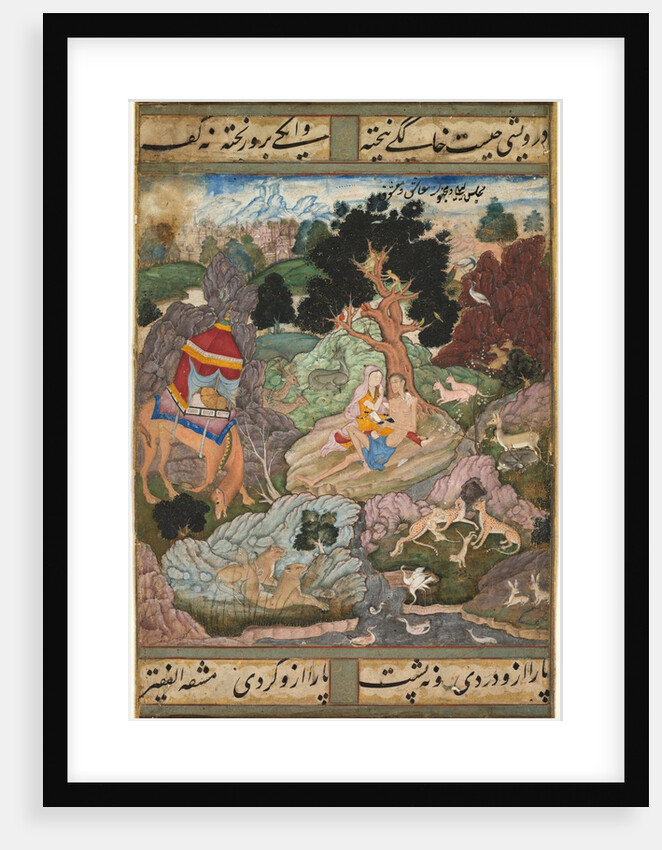
Layla and Majnun in the wilderness with animals, from a Khamsa…, c. 1590-1600
Image information
Sizing information
| Overall size (inc frame) | x cm ( x in) |
| Depth | cm (in) |
| Artwork | x cm ( x in) |
| Border (mount) |
cm
top/bottom
(in)
cm left/right (in) |
| The paper size of our wall art shipped from the US is sized to the nearest inch. | |

Our framed prints
Every framed picture is created by hand in our workshop by specialist framers.
Black, white, silver, gold or natural frames available, supplied ready to hang.
All our frames have a smooth satin finish, and measure 20mm (front face) by 23mm (depth from wall).
Read more about our framed art prints.
Manufactured in the UK, the US and the EU
All products are created to order in our print factories around the globe, and we are the trusted printing partner of many high profile and respected art galleries and museums.
We are proud to have produced over 1 million prints for hundreds of thousands of customers.
Delivery & returns
We print everything to order so delivery times may vary but all framed pictures are despatched within 3 days.
Delivery to the UK, Ireland, mainland EU & US is free when you spend £75. Otherwise, delivery to the UK costs £10 for a single framed print.
We will happily replace your order if everything isn’t 100% perfect.
Product images of Layla and Majnun in the wilderness with animals, from a Khamsa…, c. 1590-1600




Product details Layla and Majnun in the wilderness with animals, from a Khamsa…, c. 1590-1600
Layla and Majnun in the wilderness with animals, from a Khamsa…, c. 1590-1600
Layla and Majnun in the wilderness with animals, from a Khamsa (Quintet) of Amir Khusrau Dihlavi, c. 1590-1600. Nestled in the multicoloured rocks are the reunited lovers Layla and Majnun, forced by society to remain separated for years. Majnun?s name means "madman," since the separation drove him past the brink of sanity. Exiling himself to the wilderness, he became emaciated. When Layla found him after a prophetic dream, the wild animals gathered around, drawn to the purity and depth of their love. This painting illustrates a version of the story as told by an Indian author who wrote in Persian. He altered the ending given by previous Persian authors to the ancient Bedouin tale that originated among nomadic tribes of the Arabian Peninsula, in which Layla dies before the couple can be physically reunited.
- Image ref: 2733472
- Heritage Art/Heritage Images
Find related images
zoom