
Sizing information
| Overall size (inc frame) | x cm ( x in) |
| Depth | cm (in) |
| Artwork | x cm ( x in) |
| Border (mount) |
cm
top/bottom
(in)
cm left/right (in) |
| The paper size of our wall art shipped from the US is sized to the nearest inch. | |

Our framed prints
Every framed picture is created by hand in our workshop by specialist framers.
Black, white, silver, gold or natural frames available, supplied ready to hang.
All our frames have a smooth satin finish, and measure 20mm (front face) by 23mm (depth from wall).
Read more about our framed art prints.
Manufactured in the UK, the US and the EU
All products are created to order in our print factories around the globe, and we are the trusted printing partner of many high profile and respected art galleries and museums.
We are proud to have produced over 1 million prints for hundreds of thousands of customers.
Delivery & returns
We print everything to order so delivery times may vary but all framed pictures are despatched within 3 days.
Delivery to the UK, Ireland, mainland EU & US is free when you spend £75. Otherwise, delivery to the UK costs £10 for a single framed print.
We will happily replace your order if everything isn’t 100% perfect.
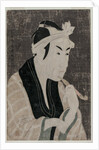
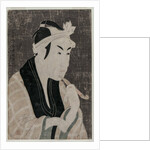
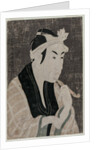
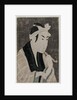
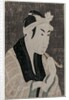
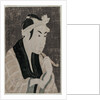
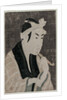
Product images of Matsumoto Koshiro IV as Gorobei, the Fish Seller from Sanya, 1794




Product details Matsumoto Koshiro IV as Gorobei, the Fish Seller from Sanya, 1794
Matsumoto Koshiro IV as Gorobei, the Fish Seller from Sanya, 1794
Matsumoto Koshiro IV as Gorobei, the Fish Seller from Sanya, 1794. Sharaku portrayed the actor Matsumoto Koshiro IV in his role as the fish merchant Gorobei in the play A Medley of Tales of Revenge , performed at the Kiri Theater in June 1794. The actor specialized in the wagoto , or "gentle style," of acting. In the play, the fish merchant, whose business is located near the Yoshiwara, helps two courtesan sisters avenge their father?s murder. Sharaku created portraits for seven actors appearing in this play. During his ten-month career, Sharaku created about 150 designs for prints, including 28 bust portraits. Many of the portraits were printed with a gray mica background, a popular technique banned in 1794, the year Sharaku was active as a print designer. Censorship edicts restricted themes, sizes, and techniques used in the printing industry as an attempt to curtail the luxuries of the merchant class, patrons of prints. Although the lowest class in society, they had become the wealthiest class by the 18th century. In an effort to maintain a hierarchy, governmental edicts often regulated basic aspects of life.
- Image ref: 2734798
- Heritage Art/Heritage Images
Find related images
zoom