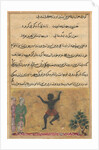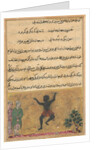
Page from Tales of a Parrot: Twenty-second night: The court jester?, c. 1560
Image information
Sizing information
| Overall size (inc frame) | x cm ( x in) |
| Depth | cm (in) |
| Artwork | x cm ( x in) |
| Border (mount) |
cm
top/bottom
(in)
cm left/right (in) |
| The paper size of our wall art shipped from the US is sized to the nearest inch. | |

Our framed prints
Every framed picture is created by hand in our workshop by specialist framers.
Black, white, silver, gold or natural frames available, supplied ready to hang.
All our frames have a smooth satin finish, and measure 20mm (front face) by 23mm (depth from wall).
Read more about our framed art prints.
Manufactured in the UK, the US and the EU
All products are created to order in our print factories around the globe, and we are the trusted printing partner of many high profile and respected art galleries and museums.
We are proud to have produced over 1 million prints for hundreds of thousands of customers.
Delivery & returns
We print everything to order so delivery times may vary but all framed pictures are despatched within 3 days.
Delivery to the UK, Ireland, mainland EU & US is free when you spend £75. Otherwise, delivery to the UK costs £10 for a single framed print.
We will happily replace your order if everything isn’t 100% perfect.
Product images of Page from Tales of a Parrot: Twenty-second night: The court jester?, c. 1560




Product details Page from Tales of a Parrot: Twenty-second night: The court jester?, c. 1560
Page from Tales of a Parrot: Twenty-second night: The court jester?, c. 1560
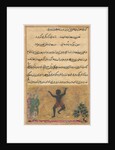
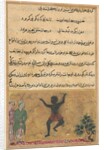
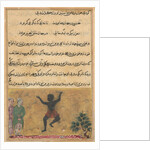
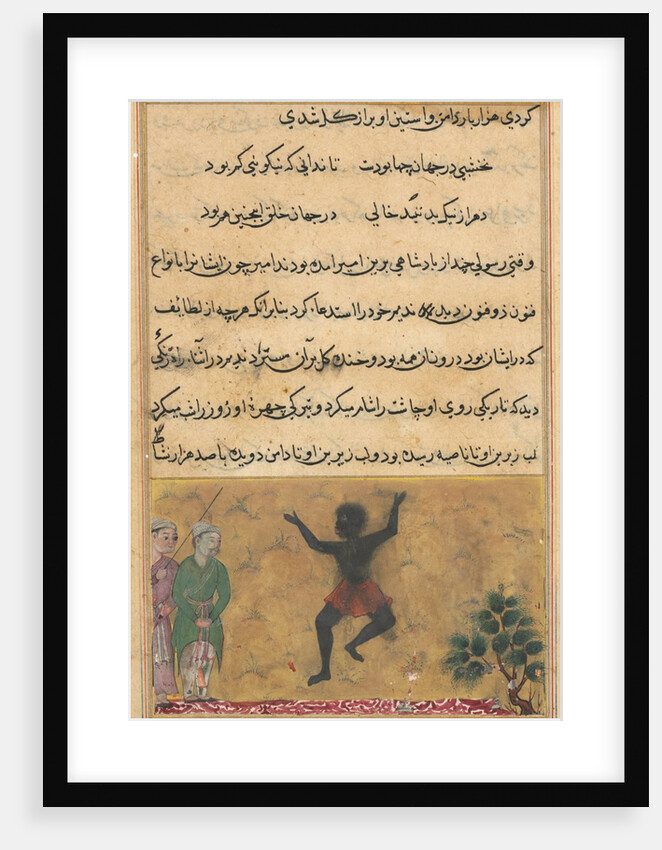
Page from Tales of a Parrot (Tuti-nama): Twenty-second night: The court jester meets a Zangi dancing with joy, and learns from him that the cause of his happiness is his assignation with a woman who is the jester?s own wife, c. 1560. In the opening scene of the parrot?s bawdy story about a jester, who is shown wearing green on his way to perform at the court of the amir, he came upon an Ethiopian, known as Zangi, dancing by the side of the road. When he learned that the Zangi was overjoyed because he was planning to meet his beloved, the jester?s own wife, the jester was so distraught he was unable to perform, and the amir threw him in prison. The tale draws upon stereotypes about Africans that were current in India and Iran during the 1300s or earlier, when the text was written; these include association with music, dance, and sex. In the painting of around 1560, the artist depicted the Zangi as described in the text as semi-wild with caricatured physical traits, uncovered head, and little clothing.
- Image ref: 2737042
- Heritage Art/Heritage Images
Find related images
zoom