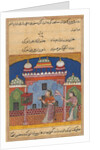
Page from Tales of a Parrot: Twenty-second night: The parrot addresses…, c. 1560
Image information
Sizing information
| Overall size (inc frame) | x cm ( x in) |
| Depth | cm (in) |
| Artwork | x cm ( x in) |
| Border (mount) |
cm
top/bottom
(in)
cm left/right (in) |
| The paper size of our wall art shipped from the US is sized to the nearest inch. | |

Our prints
We use a 200gsm fine art paper and premium branded inks to create the perfect reproduction.
Our expertise and use of high-quality materials means that our print colours are independently verified to last between 100 and 200 years.
Read more about our fine art prints.
Manufactured in the UK, the US and the EU
All products are created to order in our print factories around the globe, and we are the trusted printing partner of many high profile and respected art galleries and museums.
We are proud to have produced over 1 million prints for hundreds of thousands of customers.
Delivery & returns
We print everything to order so delivery times may vary but all unframed prints are despatched within 1–3 days.
Delivery to the UK, Ireland, mainland EU & US is free when you spend £75. Otherwise, delivery to the UK costs £5 for an unframed print of any size.
We will happily replace your order if everything isn’t 100% perfect.
Product images of Page from Tales of a Parrot: Twenty-second night: The parrot addresses…, c. 1560



Product details Page from Tales of a Parrot: Twenty-second night: The parrot addresses…, c. 1560
Page from Tales of a Parrot: Twenty-second night: The parrot addresses…, c. 1560
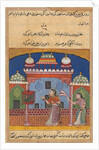
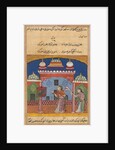
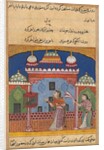
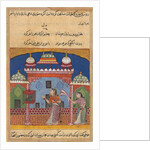
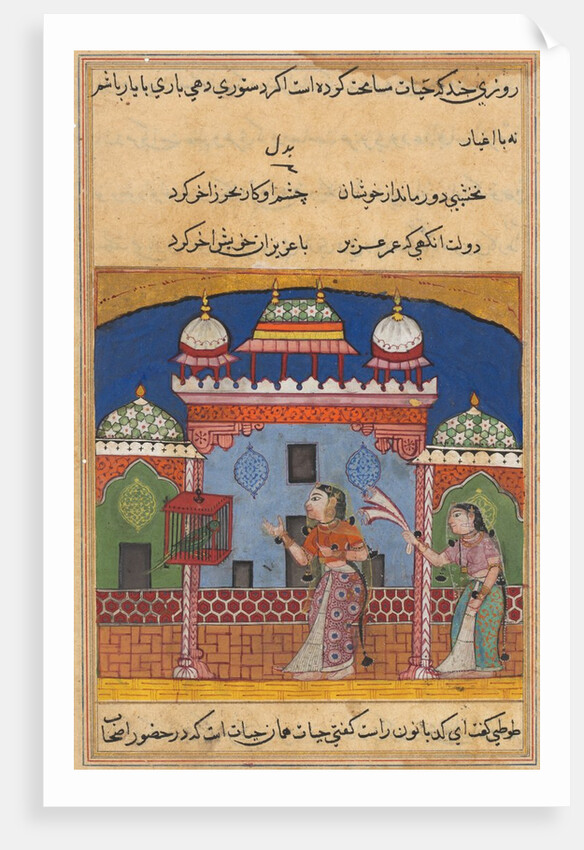
Page from Tales of a Parrot (Tuti-nama): Twenty-second night: The parrot addresses Khujasta at the beginning of the twenty-second night, c. 1560. On the 22nd night after her husband?s departure, the parrot advises his mistress Kujastha that when she meets her lover that night she should use her best judgment and manners and not allow herself to be laughed at like the wife of the amir, a local ruler. When Khujasta asked about what happened to her, the parrot related a story about the amir, his jester, and their unfaithful wives. This artist continued to use flat planes of colours and patterns characteristic of Indian painting before the Mughals. Experimentation with techniques to indicate depth and spatial recession--a new trend early in the reign of Akbar--can be seen in the tilted planes of the birdcage and the shading at the edges of the doorways.
- Image ref: 2737043
- Heritage Art/Heritage Images
Find related images
zoom