
Sizing information
| Overall size (inc frame) | x cm ( x in) |
| Depth | cm (in) |
| Artwork | x cm ( x in) |
| Border (mount) |
cm
top/bottom
(in)
cm left/right (in) |
| The paper size of our wall art shipped from the US is sized to the nearest inch. | |

Our framed prints
Every framed picture is created by hand in our workshop by specialist framers.
Black, white, silver, gold or natural frames available, supplied ready to hang.
All our frames have a smooth satin finish, and measure 20mm (front face) by 23mm (depth from wall).
Read more about our framed art prints.
Manufactured in the UK, the US and the EU
All products are created to order in our print factories around the globe, and we are the trusted printing partner of many high profile and respected art galleries and museums.
We are proud to have produced over 1 million prints for hundreds of thousands of customers.
Delivery & returns
We print everything to order so delivery times may vary but all framed pictures are despatched within 3 days.
Delivery to the UK, EU & US is free when you spend £75. Otherwise, delivery to the UK costs £10 for a single framed print.
We will happily replace your order if everything isn’t 100% perfect.
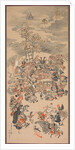
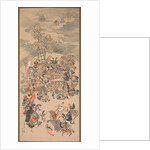
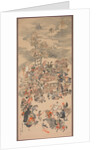
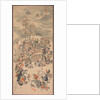
Product images of Parinirvana with Otsu-e Subjects, 1800s




Product details Parinirvana with Otsu-e Subjects, 1800s
Parinirvana with Otsu-e Subjects, 1800s
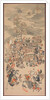
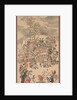
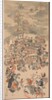
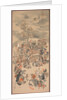
Parinirvana with Otsu-e Subjects, 1800s. The painting parodies the traditional representation of this subject. The death of Buddha is actually the moment he achieves nirvana and escapes the endless cycle of death and rebirth. Hakuen transformed this serious moment (see The Death of the Buddha [1916.1141]) into a lively parody with otsu-e subjects. Mourners surround the Buddha. An oni, who pretends to be a priest, holds his gong in the air as he beats his drums and chants prayers. The wisteria maiden appears at the left, bringing water to the mourners. Behind her is an oni in the guise of a thunder god beating his drums. The animals along the foreground represent other otsu-e characters and models. The painting would have amused 19th-century viewers familiar with the usual Buddhist imagery.
- Image ref: 2737368
- Heritage Art/Heritage Images
Find related images
zoom