
Sizing information
| Overall size (inc frame) | x cm ( x in) |
| Depth | cm (in) |
| Artwork | x cm ( x in) |
| Border (mount) |
cm
top/bottom
(in)
cm left/right (in) |
| The paper size of our wall art shipped from the US is sized to the nearest inch. | |

Our framed prints
Every framed picture is created by hand in our workshop by specialist framers.
Black, white, silver, gold or natural frames available, supplied ready to hang.
All our frames have a smooth satin finish, and measure 20mm (front face) by 23mm (depth from wall).
Read more about our framed art prints.
Manufactured in the UK, the US and the EU
All products are created to order in our print factories around the globe, and we are the trusted printing partner of many high profile and respected art galleries and museums.
We are proud to have produced over 1 million prints for hundreds of thousands of customers.
Delivery & returns
We print everything to order so delivery times may vary but all framed pictures are despatched within 3 days.
Delivery to the UK, EU & US is free when you spend £75. Otherwise, delivery to the UK costs £10 for a single framed print.
We will happily replace your order if everything isn’t 100% perfect.
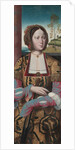
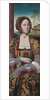
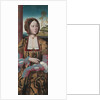
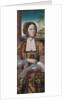
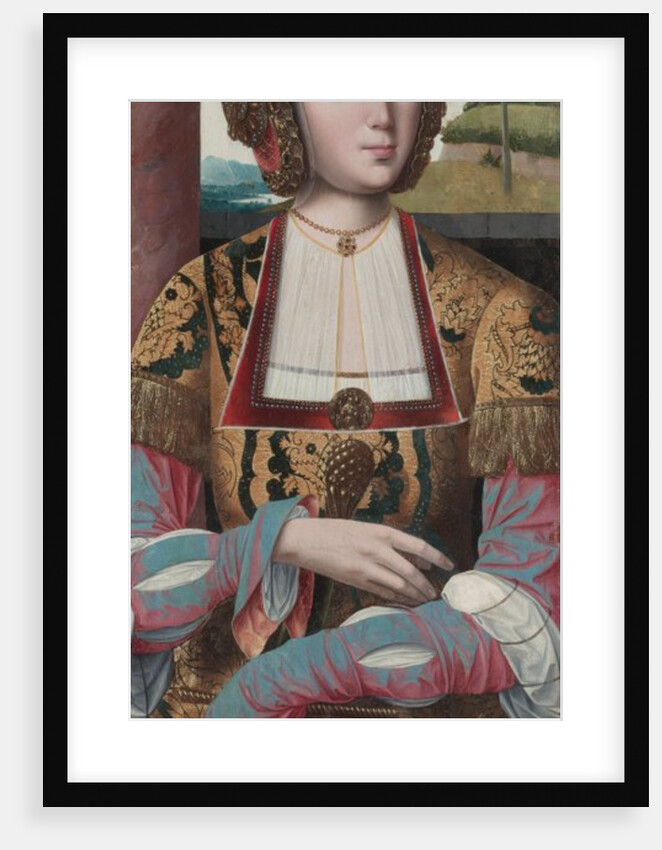
Product images of Saint Catherine, c. 1520




Product details Saint Catherine, c. 1520
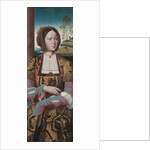
Saint Catherine, c. 1520
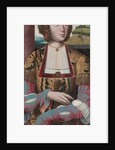
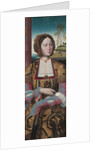
Saint Catherine, c. 1520. Saint Catherine holds the sword with which she was martyred, and Saint Barbara holds both a book and a ring symbolizing her scholarly pursuits and union with God. According to legend, the leather thongs with which she was beaten were transformed into peacock plumes. These two paintings were originally the wings of an altarpiece flanking a central panel, now lost, that may have depicted the Holy Family. The identity of this artist is unknown, but he is named for a painting in the Chapel of the Holy Blood in Bruges. Bruges flourished as an international commercial center through the 1400s and early 1500s. Among its residents were many foreign merchants and bankers who, along with the Burgundian court, patronized artists and attracted specialized craftsmen such as furriers, hatters, jewelers, and goldsmiths. Bruges?s artistic production in the 1400s included celebrated artists like Jan van Eyck, Petrus Christus, Hans Memling, and Gerard David who painted large altarpieces, small panels for private devotion, and portraits. Bruges also remained an important center for the production of illuminated manuscripts.
- Image ref: 2739556
- Heritage Art/Heritage Images
Find related images
zoom