Sizing information
| Overall size (inc frame) | x cm ( x in) |
| Depth | cm (in) |
| Artwork | x cm ( x in) |
| Border (mount) |
cm
top/bottom
(in)
cm left/right (in) |
| The paper size of our wall art shipped from the US is sized to the nearest inch. | |

Our framed prints
Every framed picture is created by hand in our workshop by specialist framers.
Black, white, silver, gold or natural frames available, supplied ready to hang.
All our frames have a smooth satin finish, and measure 20mm (front face) by 23mm (depth from wall).
Read more about our framed art prints.
Manufactured in the UK, the US and the EU
All products are created to order in our print factories around the globe, and we are the trusted printing partner of many high profile and respected art galleries and museums.
We are proud to have produced over 1 million prints for hundreds of thousands of customers.
Delivery & returns
We print everything to order so delivery times may vary but all framed pictures are despatched within 3 days.
Delivery to the UK, Ireland, mainland EU & US is free when you spend £75. Otherwise, delivery to the UK costs £10 for a single framed print.
We will happily replace your order if everything isn’t 100% perfect.
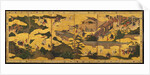
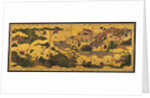
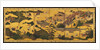
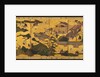
Product images of Scenes from the 'Tales of Ise', mid-1600s



Product details Scenes from the 'Tales of Ise', mid-1600s
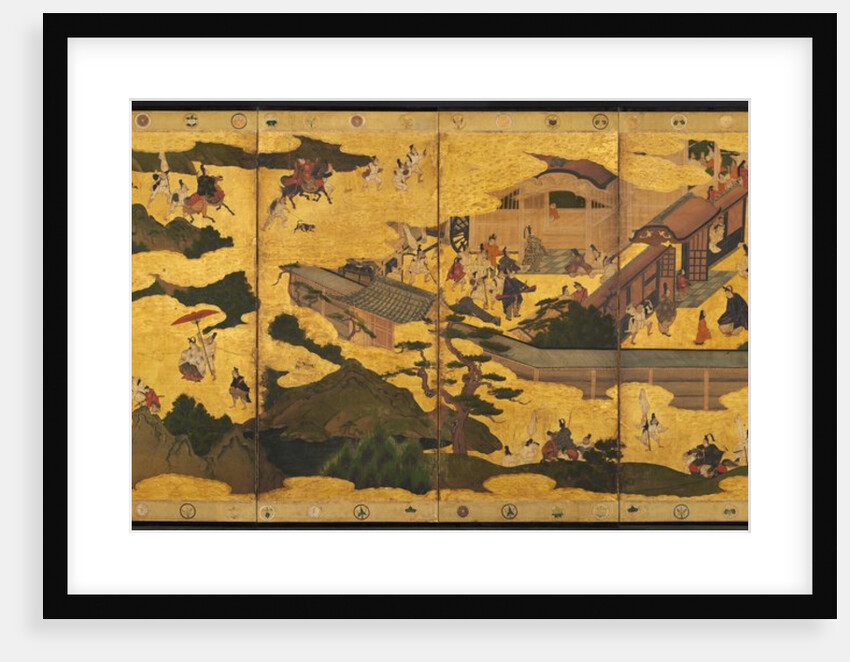
Scenes from the 'Tales of Ise', mid-1600s
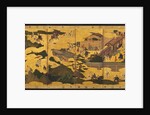
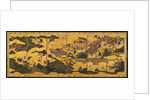
Scenes from the "Tales of Ise", mid-1600s. While the 11th century Tale of Genji is universally regarded as Japan's literary masterpiece, the source for visual imagery in Japanese culture is rivaled by another literary classic, the Tales of Ise . A 10th century anthology of poems interspersed with commentary, the Ise portrays the emotional and geographical journey of a courtier from the capital (Kyoto) into the countryside and beyond. The poems describe features of the natural, untamed terrain, linking them to the rather melancholy state of the traveler. Since the Tales of Ise was?and remains today?well read by educated Japanese, a person viewing these folding screens would immediately recognize its subject, organized as a series of discrete scenes read from right to left. Neither a signature nor a seal identifies the artist, but judging from related paintings, the work can be ascribed to an artist working in Kyoto during the first quarter of the 17th century in the manner of the painter Iwasa Matabei (1578-1650). This type of historical narrative composition became quite popular around 1600 among patrons favoring a distinctly Japanese style of painting which employed rich mineral pigments and a liberal use of gold.
- Image ref: 2739889
- Heritage Art/Heritage Images
Find related images
zoom