Sizing information
| Overall size (inc frame) | x cm ( x in) |
| Depth | cm (in) |
| Artwork | x cm ( x in) |
| Border (mount) |
cm
top/bottom
(in)
cm left/right (in) |
| The paper size of our wall art shipped from the US is sized to the nearest inch. | |

Our prints
We use a 200gsm fine art paper and premium branded inks to create the perfect reproduction.
Our expertise and use of high-quality materials means that our print colours are independently verified to last between 100 and 200 years.
Read more about our fine art prints.
Manufactured in the UK, the US and the EU
All products are created to order in our print factories around the globe, and we are the trusted printing partner of many high profile and respected art galleries and museums.
We are proud to have produced over 1 million prints for hundreds of thousands of customers.
Delivery & returns
We print everything to order so delivery times may vary but all unframed prints are despatched within 1–3 days.
Delivery to the UK, Ireland, mainland EU & US is free when you spend £75. Otherwise, delivery to the UK costs £5 for an unframed print of any size.
We will happily replace your order if everything isn’t 100% perfect.
Product images of Scenes of Witchcraft: Day, c. 1645-1649



Product details Scenes of Witchcraft: Day, c. 1645-1649
Scenes of Witchcraft: Day, c. 1645-1649
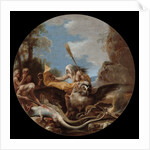
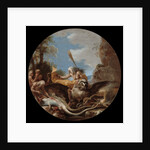
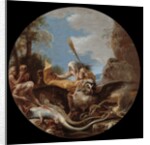
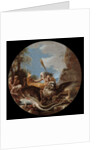
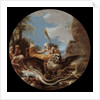
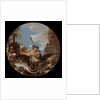
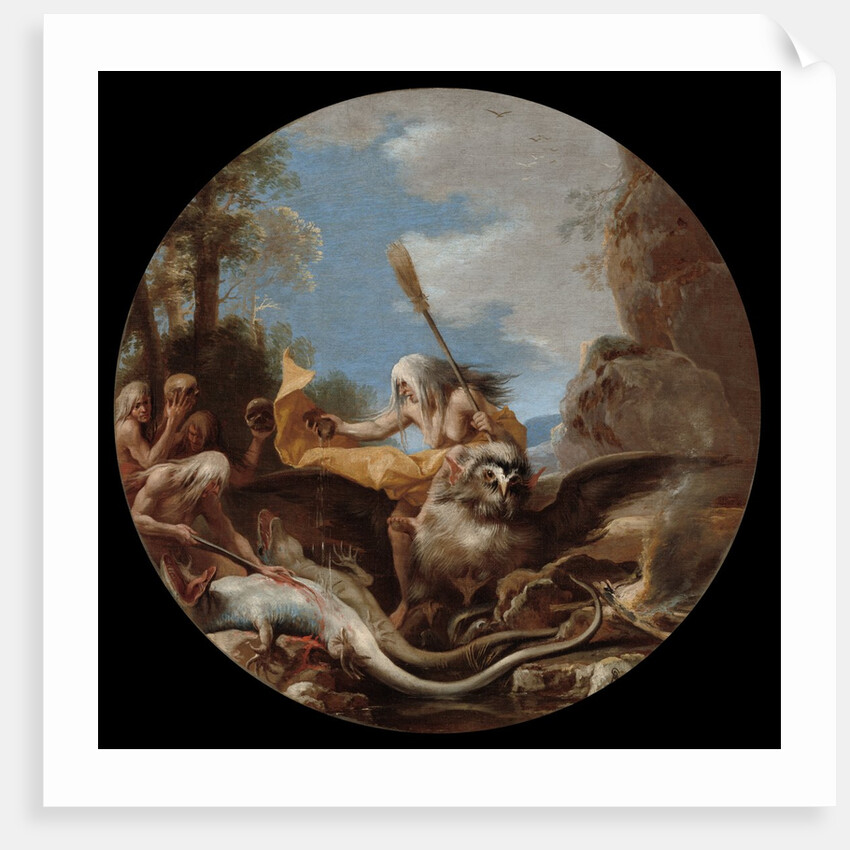
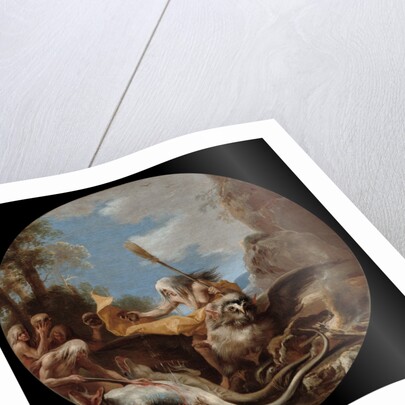
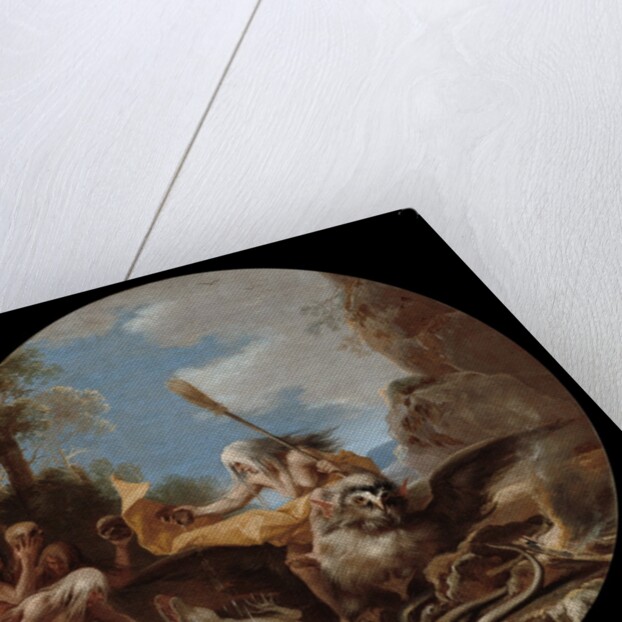
Scenes of Witchcraft: Day, c. 1645-1649. Rosa's scene at noon showcases several hoary hags that exemplify his treatment of witches. Clutching skulls, wielding brooms, and slicing lizards, the witches prepare to travel to the Sabbath, an orgy of witches. One witch flays the skin of a thrashing lizard to extract the innards needed to concoct magical unguents, while her companions brandish skulls. Goats were the common mode of transportation for witches, but Rosa substitutes an owl, a harbinger of evil. Although Rosa foregrounds the violent cruelty of witchcraft, situating the grotesque hags in the full light of day introduces a comic aspect to the scene. Rosa's use of comedy and the unexpected to critique the world around him stemmed from the satirical poetry he wrote throughout his stay in Florence and his return to Rome in 1649. By lightening the palette and mood of the painting, Day reflects his interest in satire and his self-appointed role to expose and critique human folly.
- Image ref: 2739908
- Heritage Art/Heritage Images
Find related images
zoom