Sizing information
| Overall size (inc frame) | x cm ( x in) |
| Depth | cm (in) |
| Artwork | x cm ( x in) |
| Border (mount) |
cm
top/bottom
(in)
cm left/right (in) |
| The paper size of our wall art shipped from the US is sized to the nearest inch. | |

Our prints
We use a 200gsm fine art paper and premium branded inks to create the perfect reproduction.
Our expertise and use of high-quality materials means that our print colours are independently verified to last between 100 and 200 years.
Read more about our fine art prints.
Manufactured in the UK, the US and the EU
All products are created to order in our print factories around the globe, and we are the trusted printing partner of many high profile and respected art galleries and museums.
We are proud to have produced over 1 million prints for hundreds of thousands of customers.
Delivery & returns
We print everything to order so delivery times may vary but all unframed prints are despatched within 1–3 days.
Delivery to the UK, Ireland, mainland EU & US is free when you spend £75. Otherwise, delivery to the UK costs £5 for an unframed print of any size.
We will happily replace your order if everything isn’t 100% perfect.
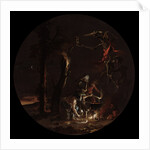
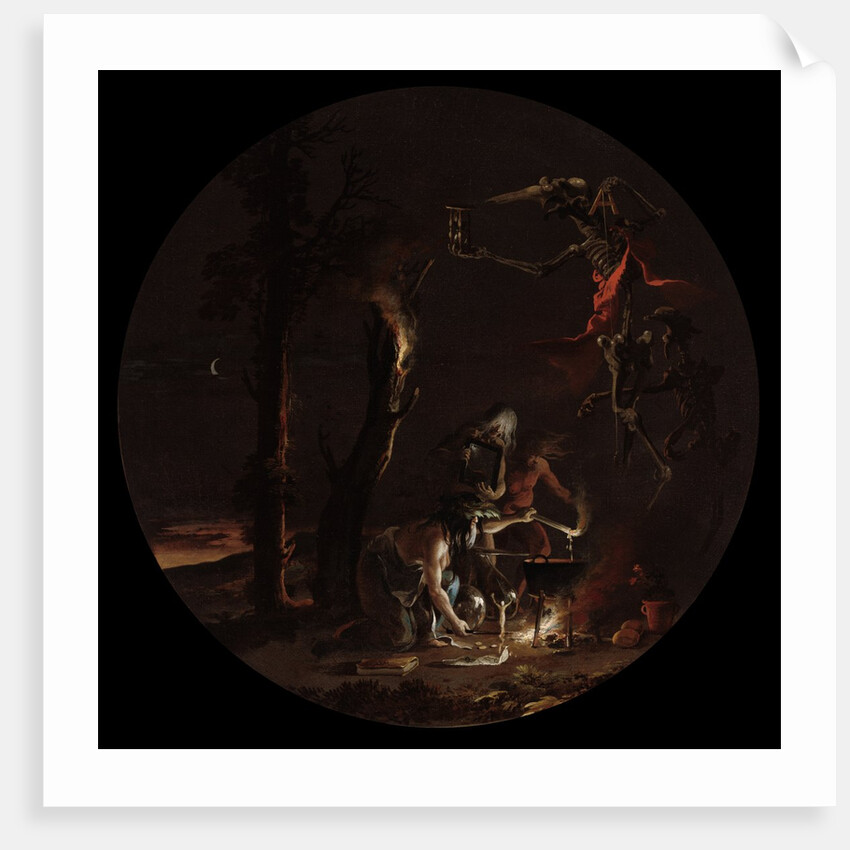
Product images of Scenes of Witchcraft: Evening, c. 1645-1649


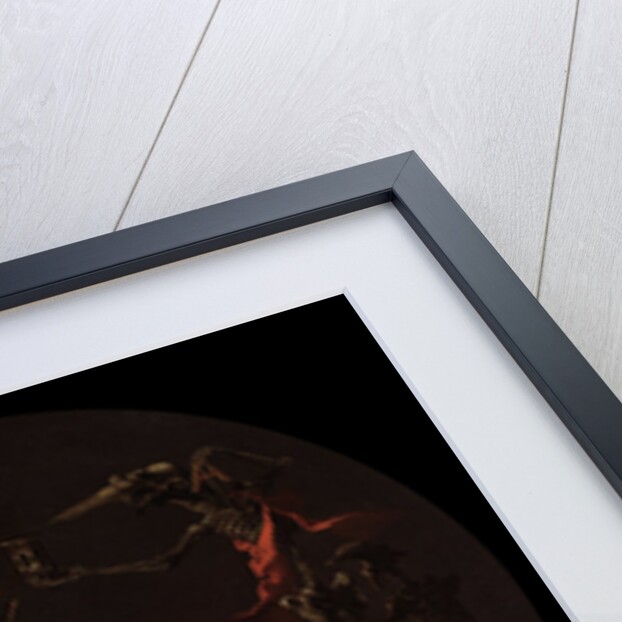

Product details Scenes of Witchcraft: Evening, c. 1645-1649
Scenes of Witchcraft: Evening, c. 1645-1649
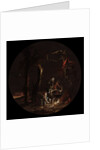
Scenes of Witchcraft: Evening, c. 1645-1649. At dusk, Rosa's hags gather around a cauldron. Above their incantations soars a conjured skeleton holding an hourglass symbolizing the brevity of life. In its left hand, the demonic creature holds a capital letter A from which extends a plumb line; as ancient signs of the moon and judgment, this strange combination of symbols embodies the nocturnal judgment the witches are doling out below. Though more rare in paint, the detailed portrayal of witches at their spells enjoyed a long literary tradition. The wax effigy alludes to classical literature by Virgil and Horace that described love magic. Poets in the 1500s and 1600s continued the tradition, writing verse about witches concocting potions and performing love spells. In Rosa's own poem "La Strega (The Witch)," the jilted Phyllis vows to take revenge on her feeble lover, listing the ingredients for her black magic: "ground powders, mystic gems, snakes and owls, stinking blood. . . ." Painting was considered "mute poetry" in the 1600s, and Rosa often explored the same themes in his written and painted art?a clever way to gain fame as a unique intellect.
- Image ref: 2739909
- Heritage Art/Heritage Images
Find related images
zoom