


Sizing information
| Overall size (inc frame) | x cm ( x in) |
| Depth | cm (in) |
| Artwork | x cm ( x in) |
| Border (mount) |
cm
top/bottom
(in)
cm left/right (in) |
| The paper size of our wall art shipped from the US is sized to the nearest inch. | |

Our framed prints
Every framed picture is created by hand in our workshop by specialist framers.
Black, white, silver, gold or natural frames available, supplied ready to hang.
All our frames have a smooth satin finish, and measure 20mm (front face) by 23mm (depth from wall).
Read more about our framed art prints.
Manufactured in the UK, the US and the EU
All products are created to order in our print factories around the globe, and we are the trusted printing partner of many high profile and respected art galleries and museums.
We are proud to have produced over 1 million prints for hundreds of thousands of customers.
Delivery & returns
We print everything to order so delivery times may vary but all framed pictures are despatched within 3 days.
Delivery to the UK, Ireland, mainland EU & US is free when you spend £75. Otherwise, delivery to the UK costs £10 for a single framed print.
We will happily replace your order if everything isn’t 100% perfect.
Product images of Sheet of Satirical Studies, c. 1650s



Product details Sheet of Satirical Studies, c. 1650s
Sheet of Satirical Studies, c. 1650s
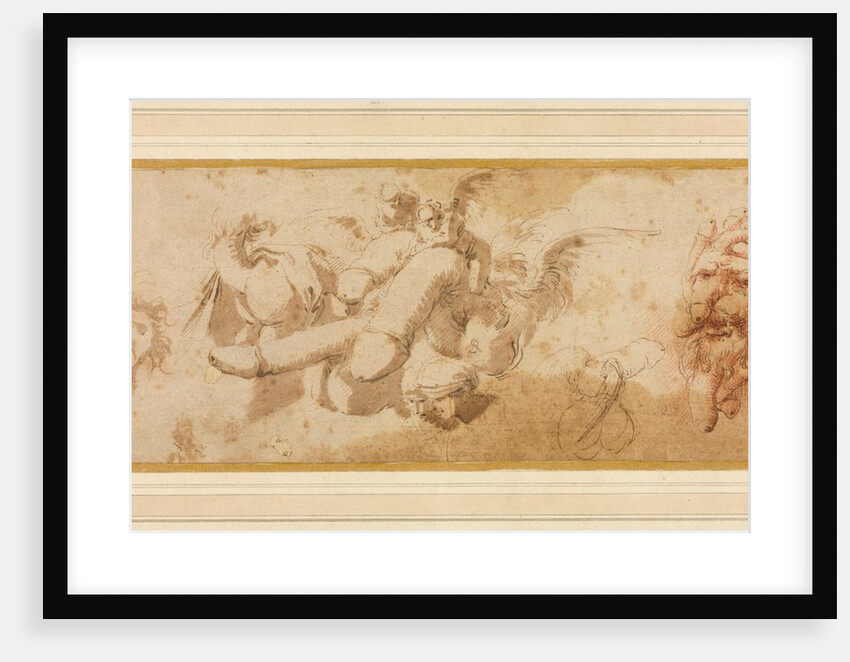
Sheet of Satirical Studies (Amorini Riding Phalli), c. 1650s. This outrageous and comical sheet stands out as one of the few existing examples of Rosa's representation of bawdy material. While Rosa was not interested in lewd imagery for vulgarity's sake, he certainly enjoyed intellectual jokes that advertised his erudite knowledge. The grotesque face at the right, and the cupids that ride the almost-elephantine phalli at center reference Classical and Renaissance motifs. Heads composed of objects-particularly the famous Testa di Cazzi ("head of penises")-were frequently used as decoration on Renaissance maiolica ceramics. This kind of imagery- like the museum's witchcraft paintings-would have been understood by 17th-century audiences as more than just grotesquerie. The exaggerated and lampooning qualities of this drawing both reference and parody these famous artistic traditions, showing how Rosa frequently used satirical humor to establish his identity as a sharp and sophisticated artist.
- Image ref: 2740476
- Heritage Art/Heritage Images
Find related images
zoom


