Sizing information
| Overall size (inc frame) | x cm ( x in) |
| Depth | cm (in) |
| Artwork | x cm ( x in) |
| Border (mount) |
cm
top/bottom
(in)
cm left/right (in) |
| The paper size of our wall art shipped from the US is sized to the nearest inch. | |

Our prints
We use a 200gsm fine art paper and premium branded inks to create the perfect reproduction.
Our expertise and use of high-quality materials means that our print colours are independently verified to last between 100 and 200 years.
Read more about our fine art prints.
Manufactured in the UK, the US and the EU
All products are created to order in our print factories around the globe, and we are the trusted printing partner of many high profile and respected art galleries and museums.
We are proud to have produced over 1 million prints for hundreds of thousands of customers.
Delivery & returns
We print everything to order so delivery times may vary but all unframed prints are despatched within 1–3 days.
Delivery to the UK, Ireland, mainland EU & US is free when you spend £75. Otherwise, delivery to the UK costs £5 for an unframed print of any size.
We will happily replace your order if everything isn’t 100% perfect.
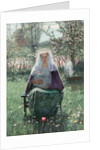
Product images of The Blessed Mother, 1892




Product details The Blessed Mother, 1892
The Blessed Mother, 1892
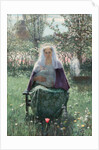
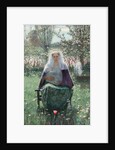
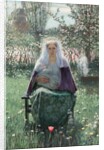
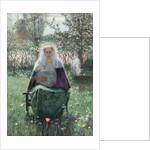
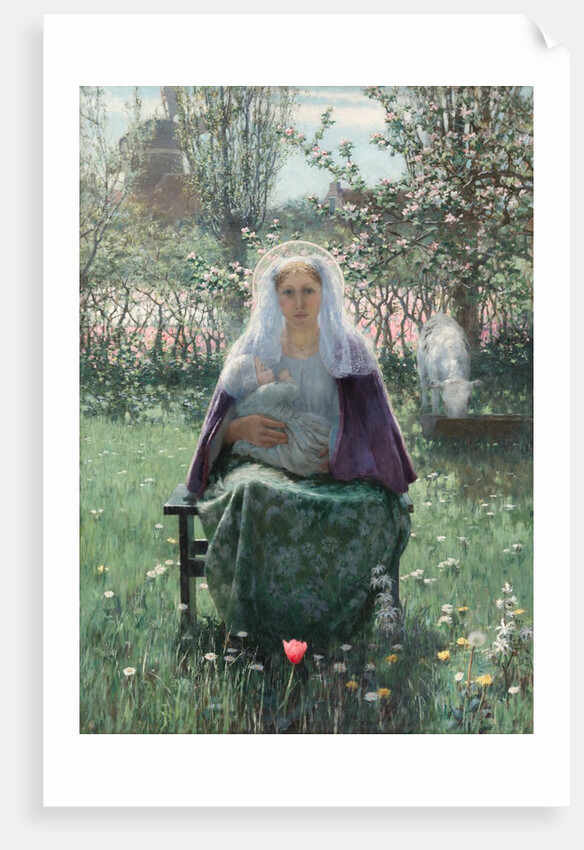
The Blessed Mother, 1892. George Hitchcock decided to study art in Paris after practicing law for five years. He eventually settled in Holland and painted this Dutch peasant mother dressed in contemporary costume holding her baby and posing formally in a garden. Hitchcock was a visionary painter fascinated by the power of faith. But, like with many of his paintings, both the title and the scene here remain ambiguous, being neither clearly religious nor clearly secular. Early critics praised the work for its technical sophistication and representation of maternal tenderness, but they questioned its religious merit. Other reviewers, however, recognized religious symbolism throughout the painting. The mother's lacy headdress can represent a halo. The apple tree suggests the lost Eden, recovered through the birth of the child. The young bullock hints to the future sacrifice of Christ, and the prominent red tulip at the feet of the figures symbolizes the cup of sorrow. This painting's religious ambiguity exemplifies the 19th-century struggle to bring faith to terms with technical, philosophical and scientific advances, namely Darwinism. Left to search for meaning in life and a spiritual identity, many artists, like Hitchcock, looked to women and nature for a link to the divine.
- Image ref: 2743500
- Heritage Art/Heritage Images
Find related images
zoom