Sizing information
| Overall size (inc frame) | x cm ( x in) |
| Depth | cm (in) |
| Artwork | x cm ( x in) |
| Border (mount) |
cm
top/bottom
(in)
cm left/right (in) |
| The paper size of our wall art shipped from the US is sized to the nearest inch. | |

Our prints
We use a 200gsm fine art paper and premium branded inks to create the perfect reproduction.
Our expertise and use of high-quality materials means that our print colours are independently verified to last between 100 and 200 years.
Read more about our fine art prints.
Manufactured in the UK, the US and the EU
All products are created to order in our print factories around the globe, and we are the trusted printing partner of many high profile and respected art galleries and museums.
We are proud to have produced over 1 million prints for hundreds of thousands of customers.
Delivery & returns
We print everything to order so delivery times may vary but all unframed prints are despatched within 1–3 days.
Delivery to the UK, EU & US is free when you spend £75. Otherwise, delivery to the UK costs £5 for an unframed print of any size.
We will happily replace your order if everything isn’t 100% perfect.
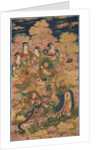
Product images of The Eight Hosts of Deva, Naga, and Yakshi, 1454




Product details The Eight Hosts of Deva, Naga, and Yakshi, 1454
The Eight Hosts of Deva, Naga, and Yakshi, 1454
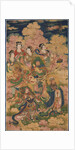
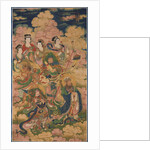
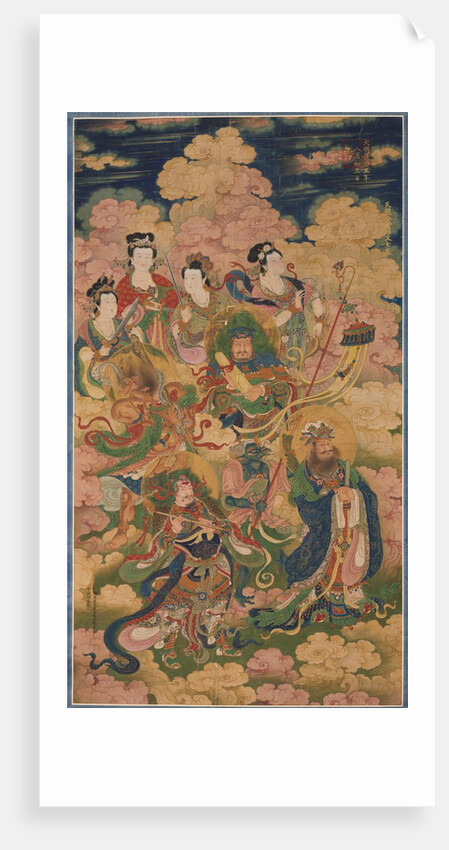
The Eight Hosts of Deva, Naga, and Yakshi, 1454. The grandest of the Buddhist mortuary rites is the Water-Land ( shuilu ) ritual. This esoteric ceremony is conducted for the salvation of "all souls of the dead on land and sea." The ostentatious ritual was performed for imperial ancestors and high officials from the Song (960-1279) to the Ming dynasties and drew large crowds. On the second day of the weeklong ceremony, paintings are hung in the inner altar. This scroll represents the Eight Hosts of Celestial Nagas and Yakshis as described in the Lotus Sutra . Together with the scroll nearby, it belongs to a set of 36 Water-Land ritual paintings that are the finest works of their types known from the Ming period. With their bright, opaque colour and fine-line gilt decoration intact and unfaded, both paintings share a remarkable state of preservation.
- Image ref: 2743876
- Heritage Art/Heritage Images
Find related images
zoom