Sizing information
| Overall size (inc frame) | x cm ( x in) |
| Depth | cm (in) |
| Artwork | x cm ( x in) |
| Border (mount) |
cm
top/bottom
(in)
cm left/right (in) |
| The paper size of our wall art shipped from the US is sized to the nearest inch. | |

Our prints
We use a 200gsm fine art paper and premium branded inks to create the perfect reproduction.
Our expertise and use of high-quality materials means that our print colours are independently verified to last between 100 and 200 years.
Read more about our fine art prints.
Manufactured in the UK, the US and the EU
All products are created to order in our print factories around the globe, and we are the trusted printing partner of many high profile and respected art galleries and museums.
We are proud to have produced over 1 million prints for hundreds of thousands of customers.
Delivery & returns
We print everything to order so delivery times may vary but all unframed prints are despatched within 1–3 days.
Delivery to the UK, Ireland, mainland EU & US is free when you spend £75. Otherwise, delivery to the UK costs £5 for an unframed print of any size.
We will happily replace your order if everything isn’t 100% perfect.
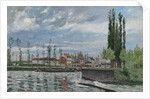
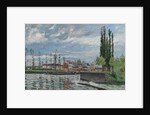
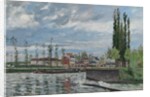
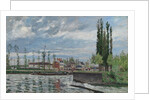
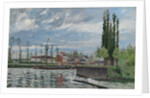
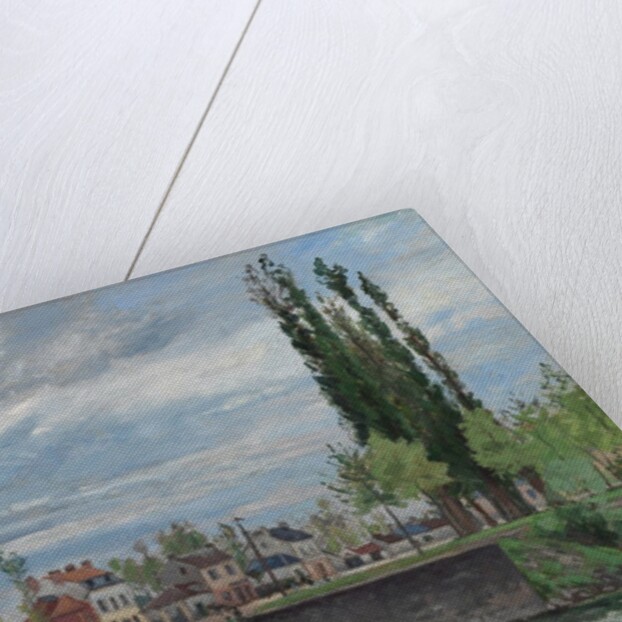
Product images of The Lock at Pontoise, 1872



Product details The Lock at Pontoise, 1872
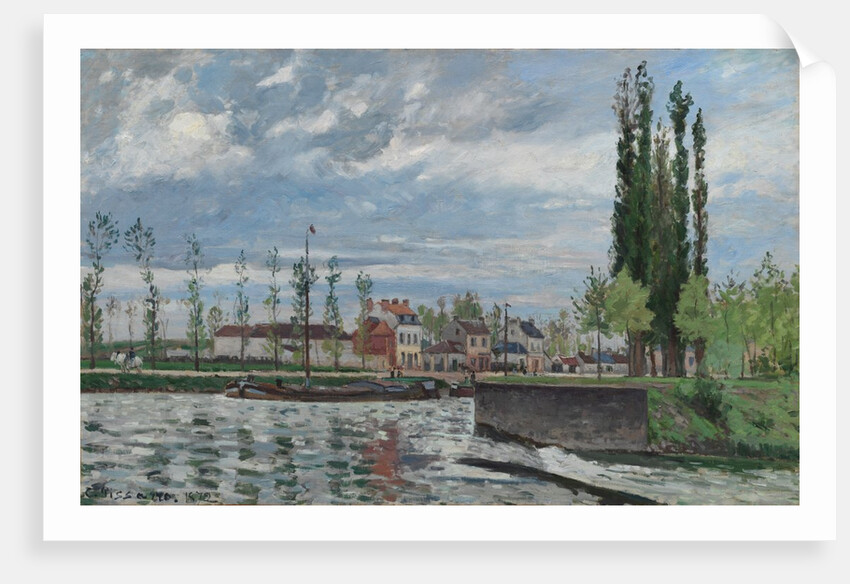
The Lock at Pontoise, 1872
The Lock at Pontoise, 1872. This depiction of a lock on the river Oise is one of four such compositions inspired by the area of Pontoise, a village north of Paris. Pissarro moved to Pontoise after he returned from England following the Franco-Prussian War (1870-71). The ten years he stayed there were not only his most prolific, but also saw the height of his artistic talents. It was also in Pontoise that Pissarro worked with Edgar Degas (1834-1917), Mary Cassatt (1845-1926), and Paul Cézanne (1839-1906). Pissarro's influence on Cézanne was especially important, as Pissarro encouraged him to paint en plein air, or outdoors. As a painter, Pissarro pursued many of the same goals as the Impressionists and exhibited with them from 1874 onward. However, the group is far from being unified stylistically, and there were many differences among its members. In contrast to other Impressionists, Pissarro was interested in darker tonalities, especially blues, greens, and browns. The more sober colours of his paintings suggest his debt to the earlier French artist Gustave Courbet (1819-1877).
- Image ref: 2744941
- Heritage Art/Heritage Images
Find related images
zoom