Sizing information
| Overall size (inc frame) | x cm ( x in) |
| Depth | cm (in) |
| Artwork | x cm ( x in) |
| Border (mount) |
cm
top/bottom
(in)
cm left/right (in) |
| The paper size of our wall art shipped from the US is sized to the nearest inch. | |

Our prints
We use a 200gsm fine art paper and premium branded inks to create the perfect reproduction.
Our expertise and use of high-quality materials means that our print colours are independently verified to last between 100 and 200 years.
Read more about our fine art prints.
Manufactured in the UK, the US and the EU
All products are created to order in our print factories around the globe, and we are the trusted printing partner of many high profile and respected art galleries and museums.
We are proud to have produced over 1 million prints for hundreds of thousands of customers.
Delivery & returns
We print everything to order so delivery times may vary but all unframed prints are despatched within 1–3 days.
Delivery to the UK, Ireland, mainland EU & US is free when you spend £75. Otherwise, delivery to the UK costs £5 for an unframed print of any size.
We will happily replace your order if everything isn’t 100% perfect.
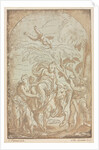
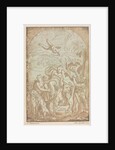
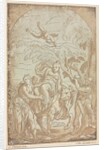
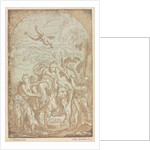
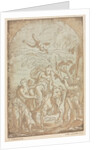
Product images of The Rape of Europa, 1725-42



Product details The Rape of Europa, 1725-42
The Rape of Europa, 1725-42
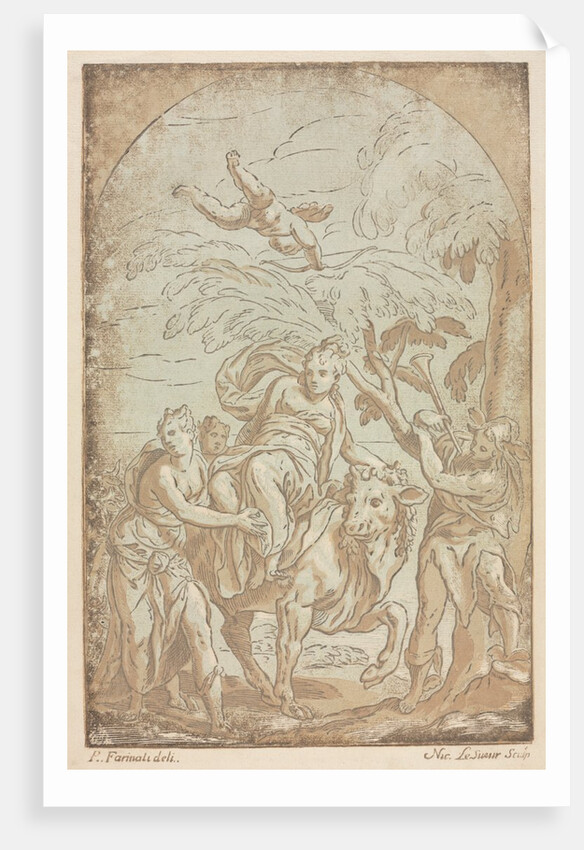
The Rape of Europa, 1725-42. Whereas in the 16th and 17th centuries chiaroscuro woodcuts were the artist's original conception or copies of contemporaneous designs, in the 18th century the technique often served to replicate the most famous masterworks of the past, especially of 16th-century Italy. During the 1700s, chiaroscuro woodcuts were directly connected to famous art collections and depended on the support of wealthy patrons. Le Sueur produced numerous chiaroscuros for the Cabinet Crozat, two volumes published in 1729 and 1742 by Count Anne Claude Philippe de Caylus and Pierre Crozat. The books reproduced famous paintings and drawings in French collections. For most of Le Sueur's chiaroscuros for this project, the black lines were printed from etched metal plates prepared by others, instead of from a woodblock. However, he did cut all four blocks for The Rape of Europa himself.
- Image ref: 2745433
- Heritage Art/Heritage Images
Find related images
zoom