
Sizing information
| Overall size (inc frame) | x cm ( x in) |
| Depth | cm (in) |
| Artwork | x cm ( x in) |
| Border (mount) |
cm
top/bottom
(in)
cm left/right (in) |
| The paper size of our wall art shipped from the US is sized to the nearest inch. | |

Our framed prints
Every framed picture is created by hand in our workshop by specialist framers.
Black, white, silver, gold or natural frames available, supplied ready to hang.
All our frames have a smooth satin finish, and measure 20mm (front face) by 23mm (depth from wall).
Read more about our framed art prints.
Manufactured in the UK, the US and the EU
All products are created to order in our print factories around the globe, and we are the trusted printing partner of many high profile and respected art galleries and museums.
We are proud to have produced over 1 million prints for hundreds of thousands of customers.
Delivery & returns
We print everything to order so delivery times may vary but all framed pictures are despatched within 3 days.
Delivery to the UK, Ireland, mainland EU & US is free when you spend £75. Otherwise, delivery to the UK costs £10 for a single framed print.
We will happily replace your order if everything isn’t 100% perfect.
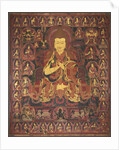
Product images of Tsong Khapa, Founder of the Geluk Order, c. 1440-1470




Product details Tsong Khapa, Founder of the Geluk Order, c. 1440-1470
Tsong Khapa, Founder of the Geluk Order, c. 1440-1470
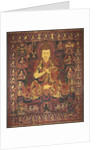
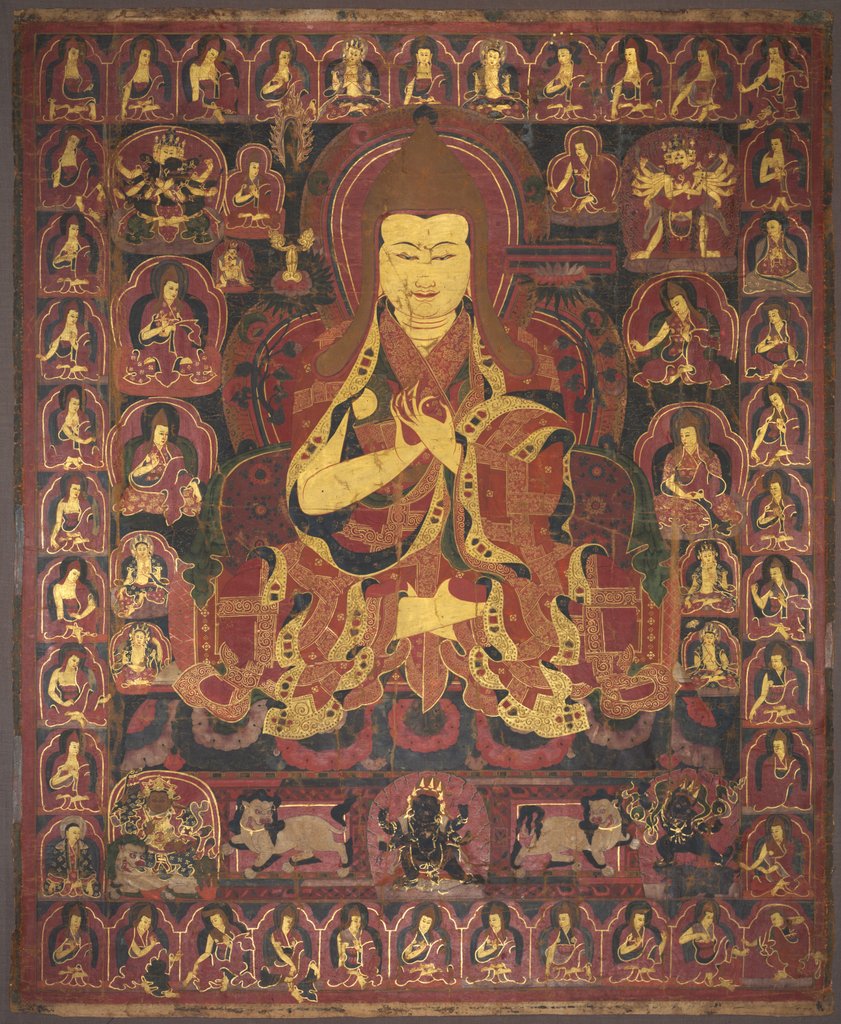
Tsong Khapa, Founder of the Geluk Order, c. 1440-1470. The Buddhist order to which the Dalai Lamas belong was founded by Tsong Khapa (1357-1419), whose image is seen here as the large central figure holding his hands in the teaching mudra. He wears the pointed golden hat that is the insignia for monks of the Geluk order. At the level of his ears are the sword and book, emblems of Manjushri, the bodhisattva of wisdom. These emblems allude to the Tibetan Buddhist tradition that accorded Tsong Khapa the status of being an emanation of Manjushri. This extraordinary, sumptuously rendered painting, made only decades after his death, retains elements of portraiture in the facial features that become formalized in later works, especially from the mid- 1600s onward, when the Geluk monks dominated the Tibetan theocracy. He is surrounded by lineage masters, many in lively gestures of debate, whose analyses of doctrines and practices led to Tsong Khapa's final formulation of the Lam Rim text on the stages of the path to enlightenment, which is foundational to the Geluk order.
- Image ref: 2746446
- Heritage Art/Heritage Images
Find related images
zoom