Sizing information
| Overall size (inc frame) | x cm ( x in) |
| Depth | cm (in) |
| Artwork | x cm ( x in) |
| Border (mount) |
cm
top/bottom
(in)
cm left/right (in) |
| The paper size of our wall art shipped from the US is sized to the nearest inch. | |

Our framed prints
Every framed picture is created by hand in our workshop by specialist framers.
Black, white, silver, gold or natural frames available, supplied ready to hang.
All our frames have a smooth satin finish, and measure 20mm (front face) by 23mm (depth from wall).
Read more about our framed art prints.
Manufactured in the UK, the US and the EU
All products are created to order in our print factories around the globe, and we are the trusted printing partner of many high profile and respected art galleries and museums.
We are proud to have produced over 1 million prints for hundreds of thousands of customers.
Delivery & returns
We print everything to order so delivery times may vary but all framed pictures are despatched within 3 days.
Delivery to the UK, Ireland, mainland EU & US is free when you spend £75. Otherwise, delivery to the UK costs £10 for a single framed print.
We will happily replace your order if everything isn’t 100% perfect.
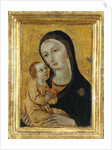
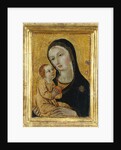
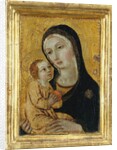
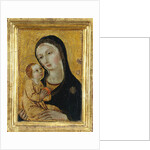
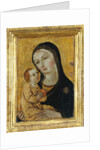
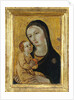
Product images of Virgin and Child, 1400s

Product details Virgin and Child, 1400s
Virgin and Child, 1400s
Icilio Federico Joni (possibly); Workshop of Sano di Pietro
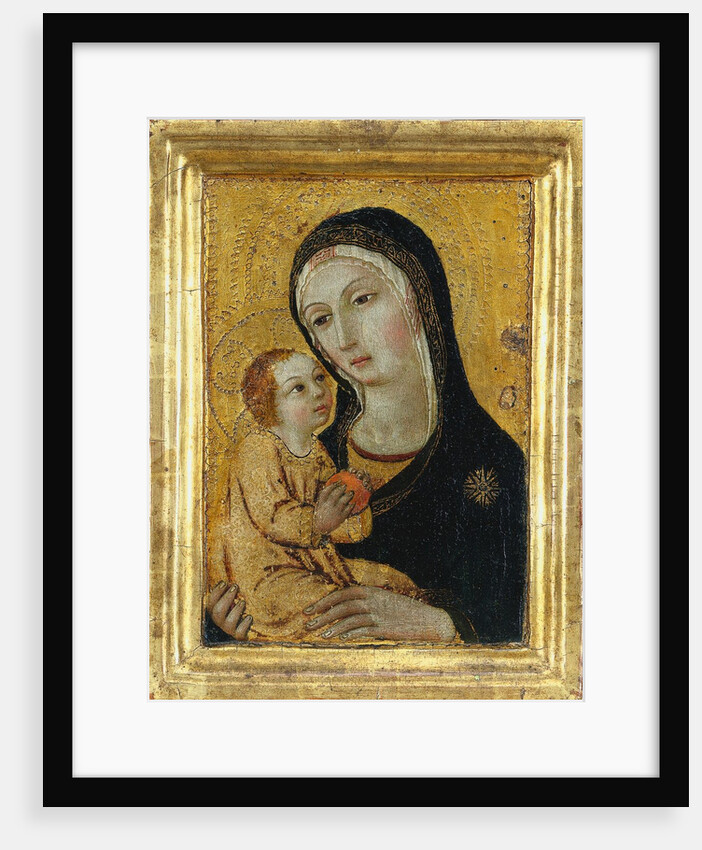
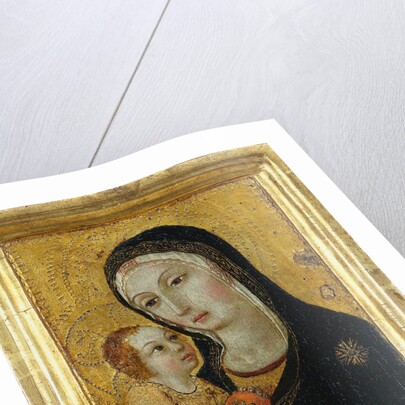
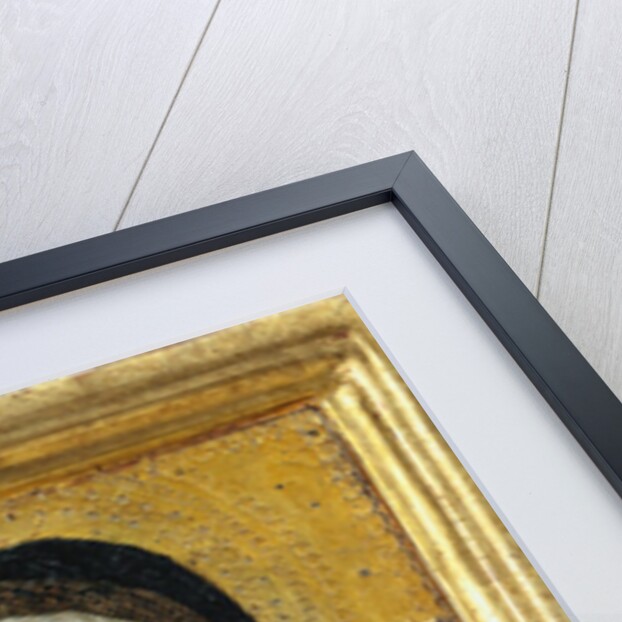
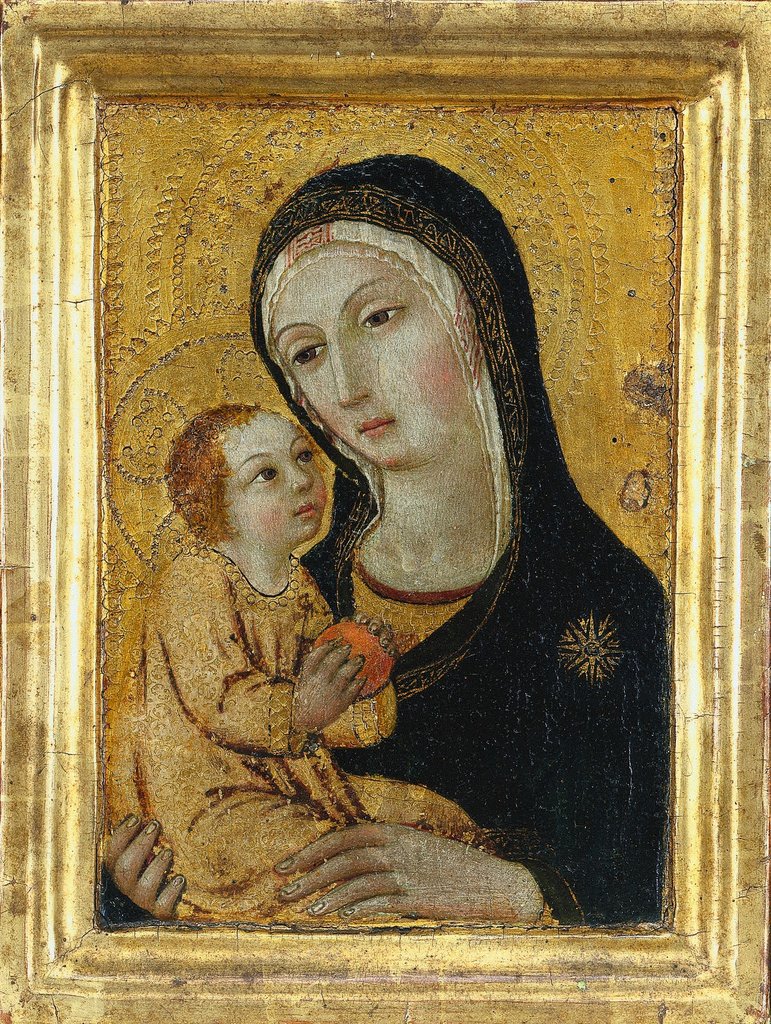
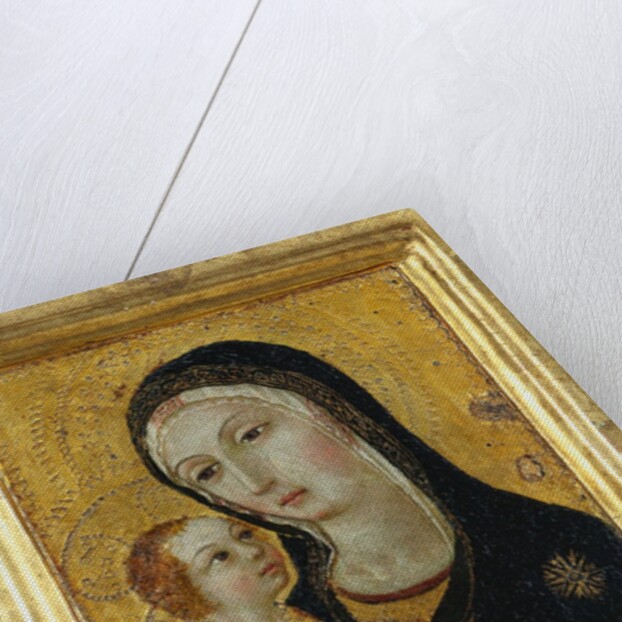
Virgin and Child, 1400s. This picture has at times been seen as a forgery due to its seemingly excellent state of preservation and the simplicity of the composition. It was cleaned, retouched and re-varnished in the 1960s, giving in an even, shiny surface, hiding to some extent its original appearance. This treatment was probably undertaken to address the losses to the Christ Child's hair and the discolouration and abrasion of the Virgin's mantle. Also problematic is the restoration of the frame and sides of the panel, which obscure the age of the work. However, both the panel itself and the pigments employed prove that this is a 15th-century painting---though of lesser quality than CMA's Virgin and Child Adored by Saints (1924.199). In particular, the Virgin's robe appears to have been painted originally with the pigment azurite, a less costly mineral pigment used as an alternative to ultramarine (made of powdered lapis lazuli). The use of this less expensive material, along with the picture's small size and simple composition, suggests that it was made by a member of Sano's workshop and not Sano himelf.
- Image ref: 2747670
- Heritage Art/Heritage Images
Find related images
zoom