Sizing information
| Overall size (inc frame) | x cm ( x in) |
| Depth | cm (in) |
| Artwork | x cm ( x in) |
| Border (mount) |
cm
top/bottom
(in)
cm left/right (in) |
| The paper size of our wall art shipped from the US is sized to the nearest inch. | |

Our framed prints
Every framed picture is created by hand in our workshop by specialist framers.
Black, white, silver, gold or natural frames available, supplied ready to hang.
All our frames have a smooth satin finish, and measure 20mm (front face) by 23mm (depth from wall).
Read more about our framed art prints.
Manufactured in the UK, the US and the EU
All products are created to order in our print factories around the globe, and we are the trusted printing partner of many high profile and respected art galleries and museums.
We are proud to have produced over 1 million prints for hundreds of thousands of customers.
Delivery & returns
We print everything to order so delivery times may vary but all framed pictures are despatched within 3 days.
Delivery to the UK, Ireland, mainland EU & US is free when you spend £75. Otherwise, delivery to the UK costs £10 for a single framed print.
We will happily replace your order if everything isn’t 100% perfect.
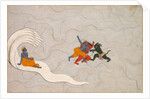
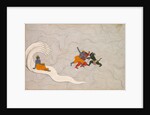
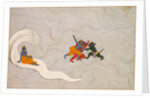
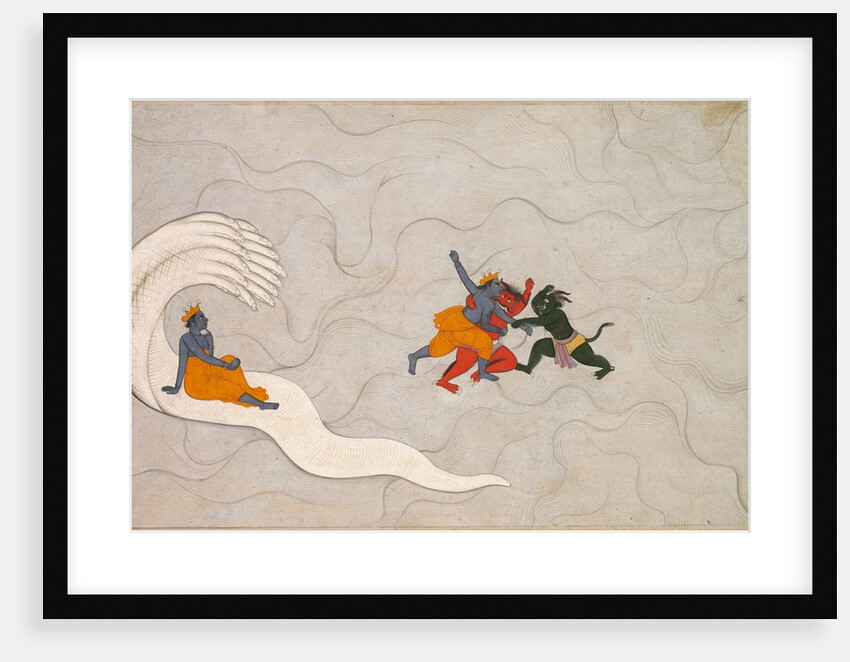
Product images of Vishnu Battles Madhu and Kaitabha, from a Markandeya Purana, c. 1760




Product details Vishnu Battles Madhu and Kaitabha, from a Markandeya Purana, c. 1760
Vishnu Battles Madhu and Kaitabha, from a Markandeya Purana, c. 1760
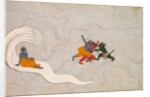
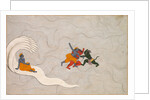
Vishnu Battles Madhu and Kaitabha, from a Markandeya Purana, c. 1760. This scene from a Hindu text is set during the moments before the creation of the world. The four-armed god Vishnu has just awakened on his multiheaded serpent bed that floats on the cosmic ocean of milk. Two demons generated from his earwax, according to the text, have already begun a primordial battle between good and evil. In the foothills of the western Himalayas there were numerous small kingdoms governed by rulers who paid tribute to the Mughal emperor. The rulers of these Pahari kingdoms, including Guler, began to sponsor workshops of court painters during the 1600s, following the model of the imperial Mughal atelier. Each court developed its own painting style; at Guler, unpopulated pale expanses offset the opaque hues of clustered figures delineated by smooth contour lines.
- Image ref: 2747705
- Heritage Art/Heritage Images
Find related images
zoom